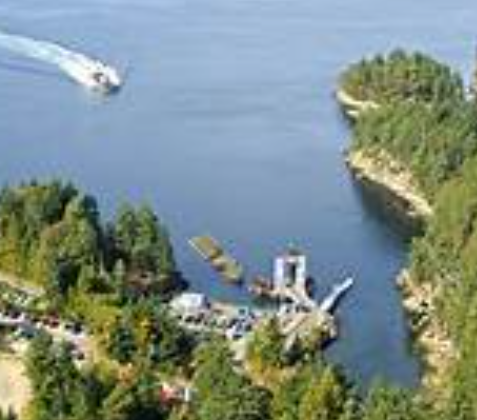
In 2008, I established Island Transport Solutions in response to the discovery that, across British Columbia, there was nowhere for anyone to find out about different modes of transportation – and in a Province almost the size of Europe, but with a population only slightly more than Scotland, there was little or no attempt to promote sustainable travel.
Ten years later, my return to the UK signalled the end of Island Transport Solutions, but now it’s time to try something new – Island Transportation – to offer online support for independent travellers challenged by a myriad of disconnected transportation providers.
Throughout British Columbia, virtually all surface transport modes are government controlled and heavily regulated. Local public transit is managed by a Provincial government agency (BC Transit) in partnership with regional councils who ultimately carry the financial risk and are therefore reluctant to underwrite bus routes that cross administrative boundaries into a neighbouring area – even when it’s obvious that people need to be able to access neighbouring cities for their daily needs. On the coast, A quasi-private corporation (BC Ferries) controls ferry routes to the islands, but in reality is wholly owned by the Provincial government. Passenger rail services, where they still exist, are run by a Crown Agency of the Federal government (ViaRail) but train services are few and far between, with the last train service on Vancouver Island withdrawn in 2011.
Needless to say, competition between modes is discouraged and virtually non-existent – so why waste money promoting your services to customers? The exception to that is air travel – and in an area as vast as British Columbia, regional airlines play an vital role in providing access to the specialist services only found in the major cities. On the west coast, multiple seaplane companies also offer alternatives to ferry travel, often at a similar cost to driving your car onto the ferry. Yet there is no one source of information to help residents or visitors find out what options are available. In a small way, Island Transport Solutions set out to try and address that for one west coast community, Gabriola Island.
Back here in the UK the position can be just as confusing – though with distances much shorter and population centres often significantly larger, the range of travel options available is often wider – but with competition between bus operators, coach operators and train operators more prevalent, it can be just as difficult to find clarity on the different travel options available.
The Combined Authorities of West Yorkshire and South Yorkshire have both committed to taking back control of bus services by the end of the decade and the government is equally committed to the re-nationalisation of the railways – but will that actually improve access to information, and keep fares affordable? Only time will tell.
Meanwhile, in the small Yorkshire community of Notton, we fall within the administration of West Yorkshire, though many of the services we rely on are just over the border in South Yorkshire. Our only bus route operates from Barnsley (South Yorkshire) to Wakefield (West Yorkshire) calling at Notton half way between. Our local bus operator, Stagecoach, operates the service from its Barnsley depot as part of a network of routes radiating from the town.
Since the COVID pandemic, the frequency of service has been cut back to one bus an hour instead of two (still a luxury by Canadian standards!) and usage declined as a result. Recently, the half-hourly service has been reinstated, together with extra buses into the late evening – but finding out about the new schedule has been anything but easy. I’ll explain why in a separate posting, but let’s just say it’s not helped by a lack of consistency from the differenmt agencies involved – which is actually quite surprising, given that in the UK, bus operators have to register details of every bus service digitally so that anyone searching online for the information will (in theory, at least) be given the same information.
 Island Transportation
Leave a comment